Scientists have patented innovative implant biomaterials—innovative composites for treating bone defects and for use in regenerative medicine! The patent was granted by the European Patent Office (EPO) for an invention entitled “Multifunctional composite implant materials for filling bone defects and regenerating bone tissue.”
Behind this success is an interdisciplinary team of researchers represented by Prof. Sylwia Rodziewicz-Motowidło from the University of Gdańsk, head of the Department of Biomedical Chemistry at the Faculty of Chemistry, together with a team consisting of Prof. Franciszek Kasprzykowski, Dr. Justyna Sawicka, Dr. Natalia Karska, and Agnieszka Kubiś, M.Sc. The project also involved scientists from the Łukasiewicz Research Network’s Institute of Ceramics and Building Materials, Wrocław University of Technology, the Institute of Biotechnology and Molecular Medicine, and representatives of SENS DX.
-The aging population and lifestyle diseases such as osteoporosis and cancer mean that the number of patients suffering from fractures and bone diseases continues to grow, – says Professor Sylwia Rodziewicz-Motowidło. – This means that there is a growing need to find a remedy for these injuries, -she adds. -The answer to this is the innovative implant biomaterials developed by our team. The composition and unique formula we have developed supports bone growth and the regeneration of damaged tissue.
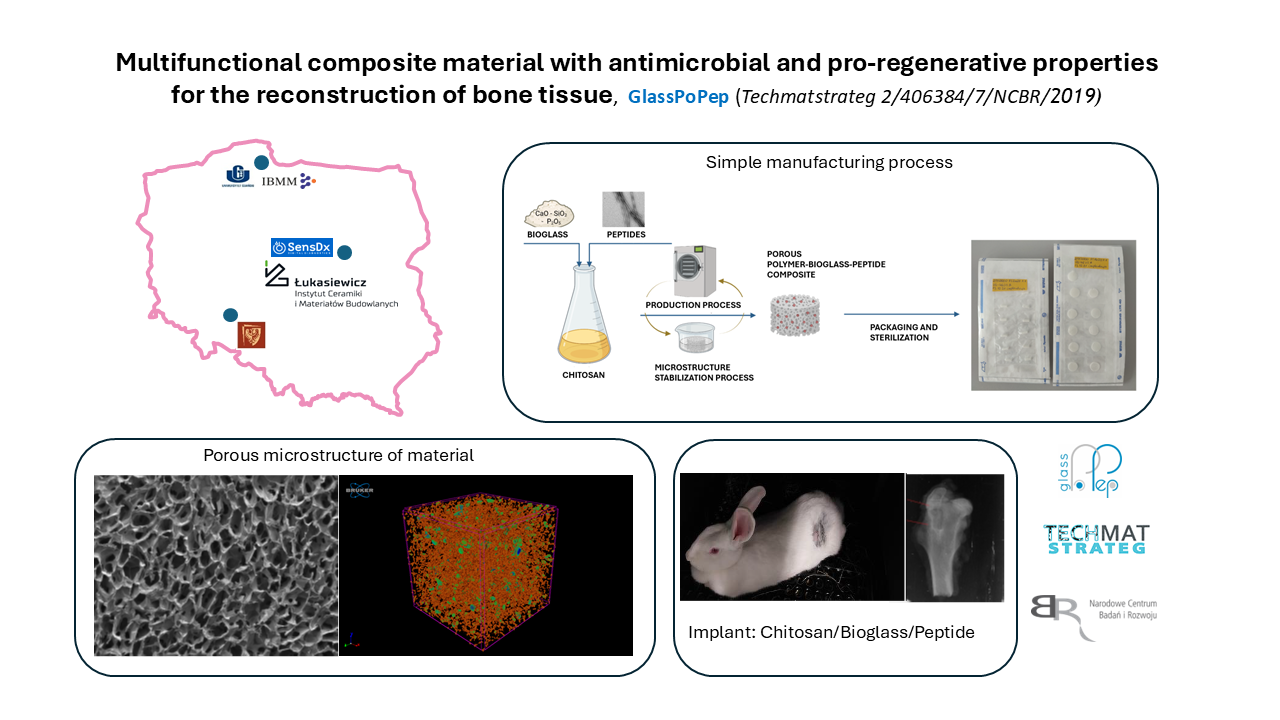
The scientists’ invention will be used in orthopedics, maxillofacial surgery, neurosurgery, and in operations performed after bone injuries. The biomaterials consist of chitosan, a natural polymer with high biocompatibility, bioactive glass, and peptides. The innovative composites also have antibacterial and pro-regenerative properties, which accelerate the healing process and reduce the number of postoperative complications in surgery and microsurgery. The biomaterials have been developed to additionally inhibit the growth of harmful microorganisms such as Staphylococcus aureus and Pseudomonas aeruginosa.
Innovative materials can also serve as a carrier for other active substances, such as antibiotics, and provide a scaffold for cells during cell therapy.
How did the idea for this invention come about?
– The idea for a joint project was born during the Bioinnovations conference in Gdańsk, where I met Dr. Artur Oziębło from the Institute of Ceramics and Building Materials, – says Prof. Sylwia Rodziewicz-Motowidło. He was looking for teams to collaborate with. Together, we visited the World Hearing Center in Kajetany, where we talked with Prof. Piotr Skarżyński about the biomaterial needs of patients after hearing surgery. These meetings inspired us to create a concept for a new biomaterial. We set up an interdisciplinary team and submitted an application for funding to the National Centre for Research and Development. We received funding in the TECHMATSTRATEG competition, and thus began the GlassPoPep project. The work took about four years and coincided with the pandemic, which made it somewhat difficult to carry out, – adds Prof. Rodziewicz-Motowidło. The project involved several key stages: selecting the components of the biocomposite, forming the final biomaterials and testing them – biological in vitro and in vivo tests, as well as assessing their toxicity and sterilizability.
ne.
The team developed as many as 20 different biocomposites, three of which were tested on animals. The developed biomaterial has a simple composition and unique biological properties – it supports bone cell influx, mineralization, and bone tissue reconstruction, while at the same time being biodegradable and replaced by newly formed bone. In addition, the material is flexible and can be cut by the surgeon directly during surgery, which facilitates its clinical application.
What was the biggest challenge?
– The biggest challenge was the pandemic restrictions – the inability to meet in person and the need to work remotely. In addition, we had to develop efficient procedures for transferring materials between teams located in different parts of Poland. Another big challenge was selecting only three biomaterials for testing from among many promising ones. We were helped by the excellent team management of the project manager, Dr. Zbigniew Jaegermann, who took care of the organization and maintained a positive atmosphere.
Discussions are currently underway with companies and investment funds to jointly develop this innovative biomaterial. The next step is product certification and testing on larger animals in order to introduce the invention into clinical practice.
The patent confirms the innovative potential of the University of Gdańsk and its contribution to the development of biomedical technologies on an international scale. The project was financed by the National Center for Research and Development as part of the GlassPoPep project (Techmatstrateg2/406384/7/NCBR/2019).
The process of preparing the patent application to the EPO was coordinated by the University of Gdańsk Technology Transfer Center, headed by director Katarzyna Gronowska.
Kontakt do Centrum Transferu Technologii – +48 58 523 33 74 lub +48 58 523 33 75, biuro@ctt.ug.edu.pl
Opracowanie: SRM, CTT UG
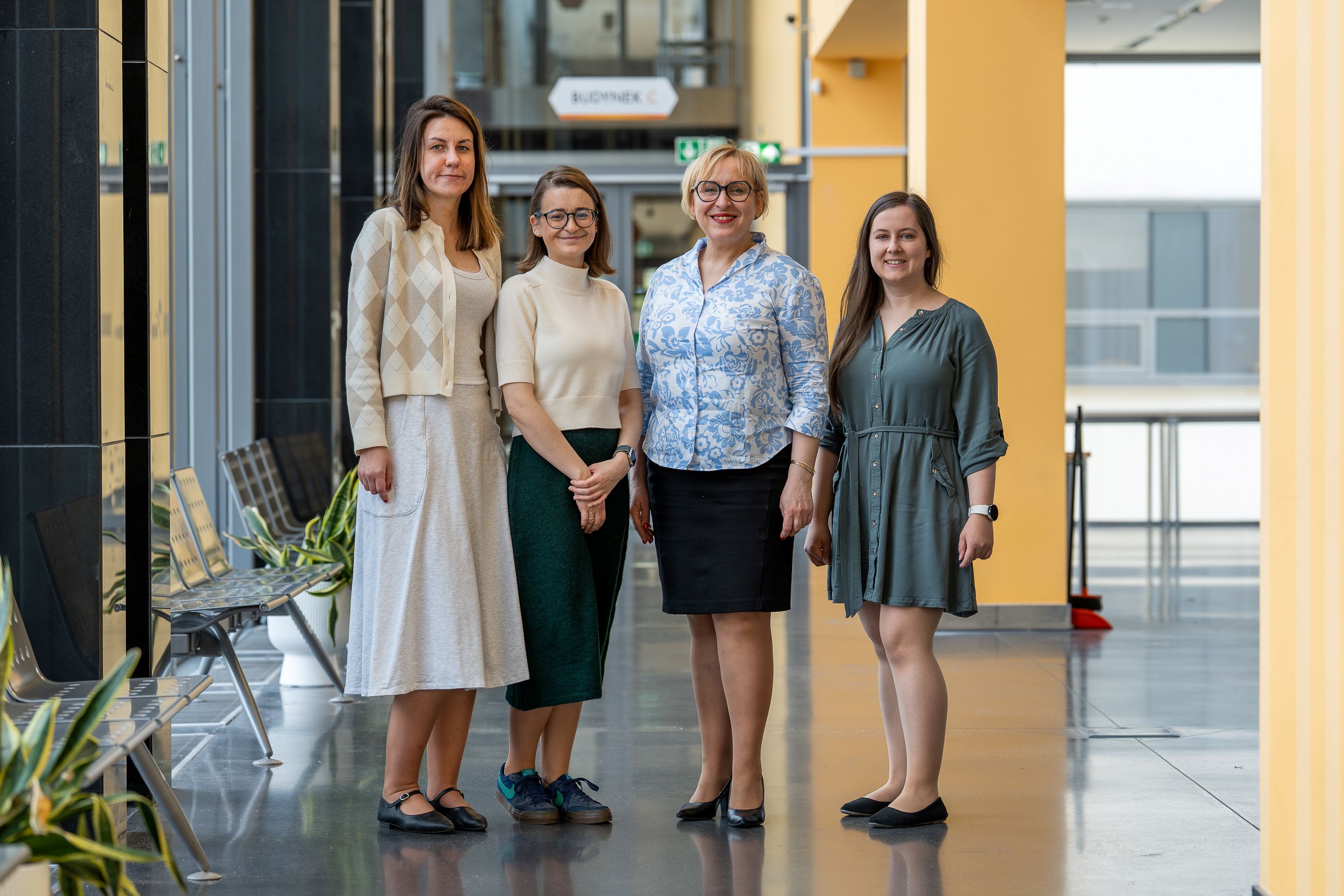
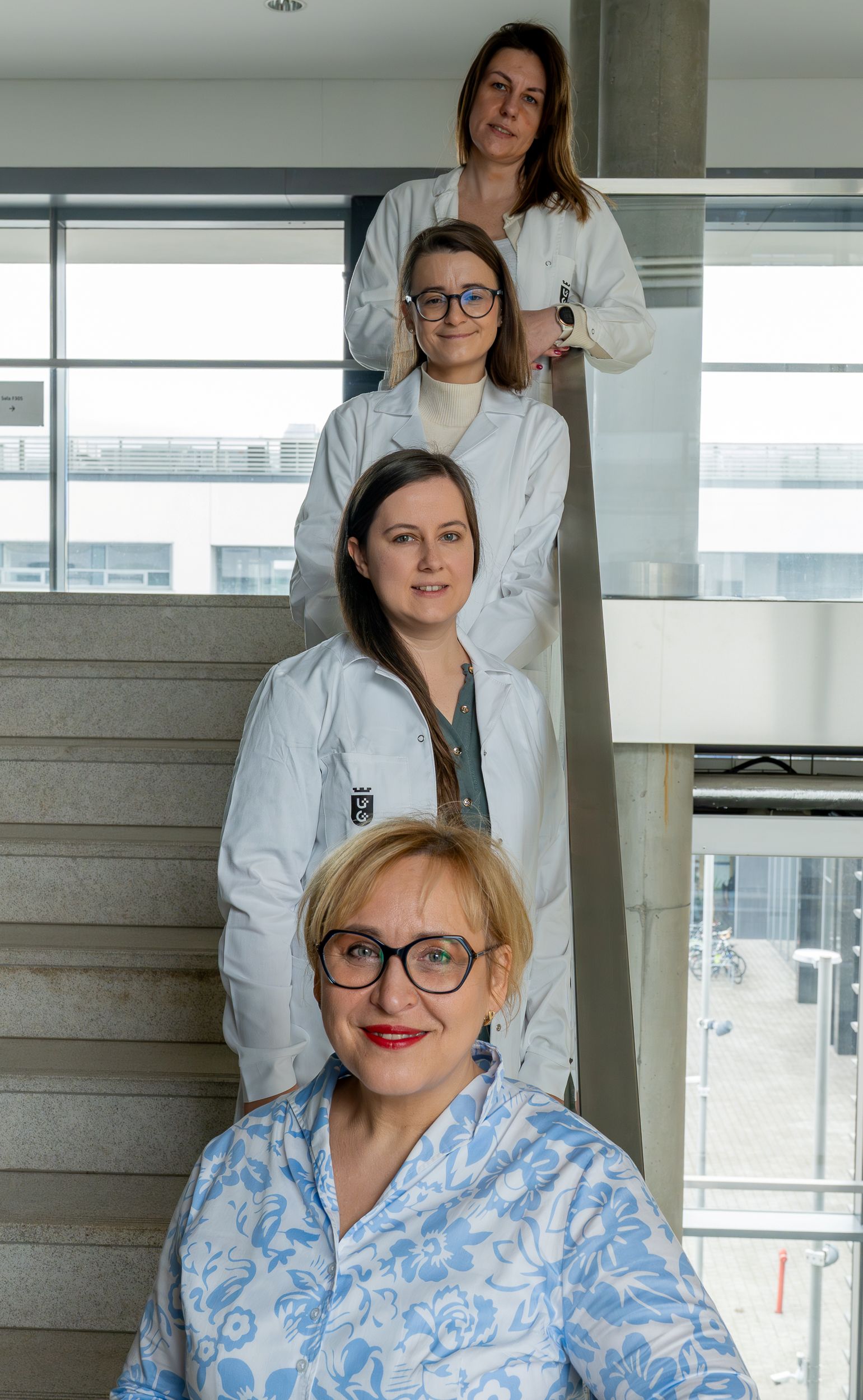
Fot. Mateusz Byczkowski/CKiP