An invention by a team of scientists from the University of Gdańsk (UG) – a technology for purifying air under the influence of radiation emitted by energy-efficient UVA diodes using a photocatalytic layer in the form of modified TiO2 – is now protected by a patent.
In an era of growing problems with smog, air pollution, and airborne diseases, solutions to improve air quality are sorely needed. A group of researchers from the Department of Environmental Technology at the Faculty of Chemistry of the University of Gdańsk, led by Prof. Adriana Zaleska-Medyńska, PhD, Eng., has developed a breakthrough technology using modified titanium oxide-based nanotubes (IV) which, when illuminated by UVA diodes, effectively purify the air of volatile organic compounds, inorganic pollutants, and microorganisms, including viruses. This technology was developed in collaboration with scientists from the Jagiellonian University and in partnership with BEWI, a Polish manufacturer of window and door joinery.
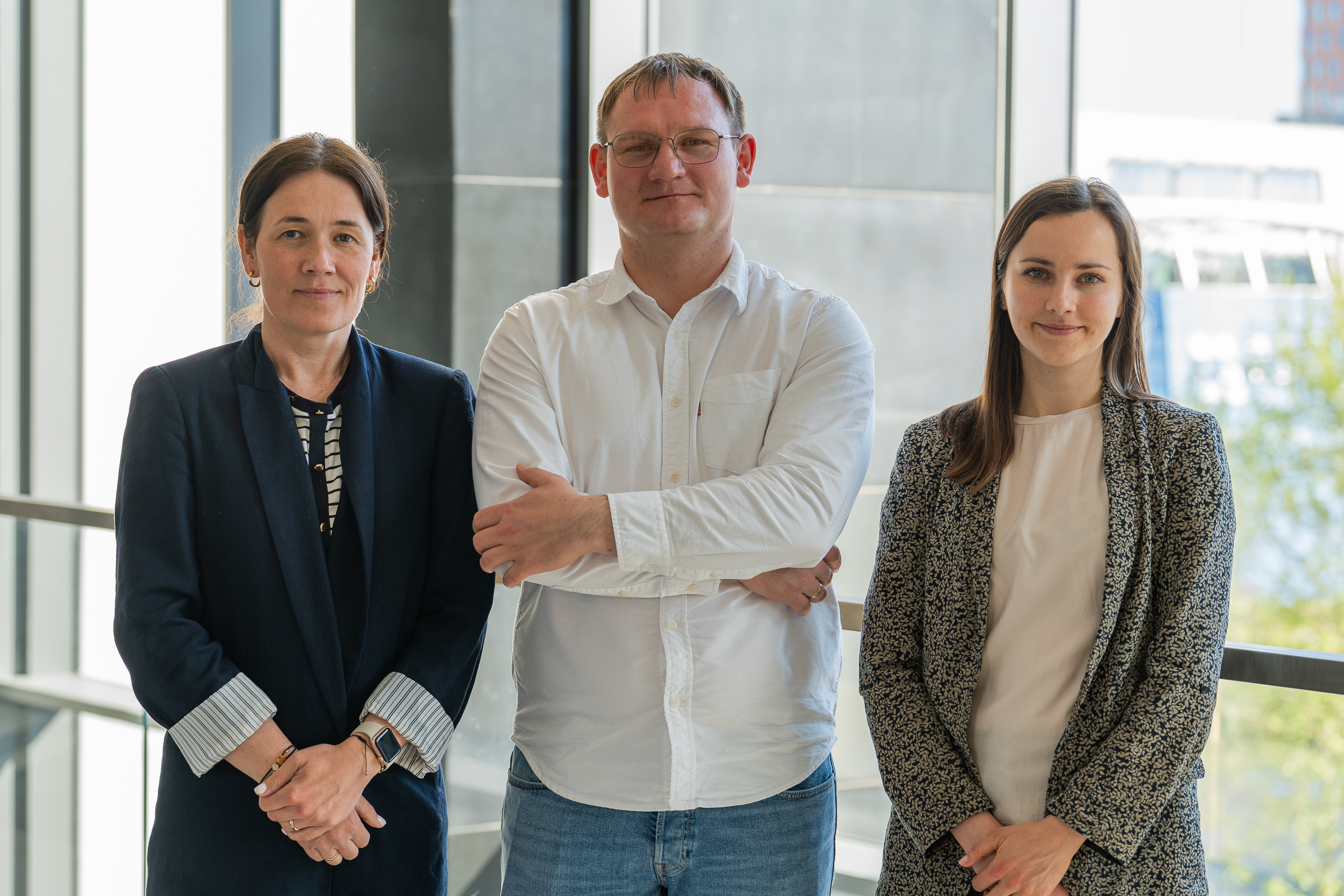
The authors of the invention from the University of Gdańsk, apart from Prof. Adriana Zaleska-Medynska, PhD, Eng., are Paweł Mazierski, PhD, Eng., Joanna Nadolna, PhD, Eng., Beata Bajorowicz, PhD, Eng., and Anna Gołąbiewska, PhD, Eng. The joint efforts of the research team focused on developing a new material with unique photocatalytic properties and its practical application.
Photocatalysis is a process in which light—mainly from the ultraviolet and visible spectrum—initiates chemical reactions on the surface of special materials (photocatalysts). In the case of the UG team’s invention, UVA radiation activates the surface of metal-modified TiO2 nanotubes, causing the formation of active forms of oxygen, including hydroxyl radicals. These powerful oxidants effectively break down organic and inorganic pollutants, mineralizing them into harmless carbon dioxide and water. This approach differs from that used in traditional filters, such as HEPA, in that instead of trapping pollutants on the surface, it causes their complete decomposition and also inactivates harmful microorganisms such as bacteria, fungi, and viruses.

TiO2 nanotubes modified with copper and silver nanoparticles are produced using a simple electrochemical method with multiple reuse of the same reagents, and the method itself is easily scalable.
“The new technology has enormous potential in many areas, including air purification in rooms where many people are present at the same time, such as schools, hospitals, and offices,” says Prof. Adriana Zaleska-Medynska.
“It also improves the quality of outdoor air, which introduces harmful chemicals into interiors through open windows, air vents, and ventilation systems. It can also be used to create self-cleaning surfaces, e.g., on building facades, which break down organic pollutants under the influence of sunlight,” adds the scientist.
Application
The technology has already found practical application. BEWI, a manufacturer of PVC and AL joinery and a member of the consortium working on the implementation of this innovative solution, has developed the first prototype of an air purifier based on the invention. The device, which can be adjusted to the size of the room and the level of pollution, effectively removes harmful chemicals and microorganisms.
BEWI engineers and technologists have also designed a modern housing for the device, ensuring its aesthetics and functionality, and adapting it to the expectations of future customers. The prototype is currently being tested in one of the hospitals. The device will be tested in rooms intended for patients who must stay in pollution-free spaces.
The invention has received funding from the National Center for Research and Development (NCBR) for further research, development, and implementation. Efforts are currently underway to move toward industrial production and commercialization of the technology. A business partner is developing the project, working to optimize the devices in terms of cost, performance, and broad application.
The modified TiO2 nanotubes developed by Prof. Adriana Zaleska-Medyńska’s team are an example of an innovative approach to combating air pollution. By using UVA radiation emitted by energy-efficient diodes and modern nanomaterials, the invention not only purifies the air, but also contributes to the protection of public health and the improvement of the quality of life in cities.
The process of patent protection for the invention was coordinated by experts from our Technology Transfer Center.
Opracowanie: PM, CTT UG
Kontakt do Centrum Transferu Technologii – +48 58 523 33 74 lub +48 58 523 33 75, biuro@ctt.ug.edu.pl